
Product Matrix

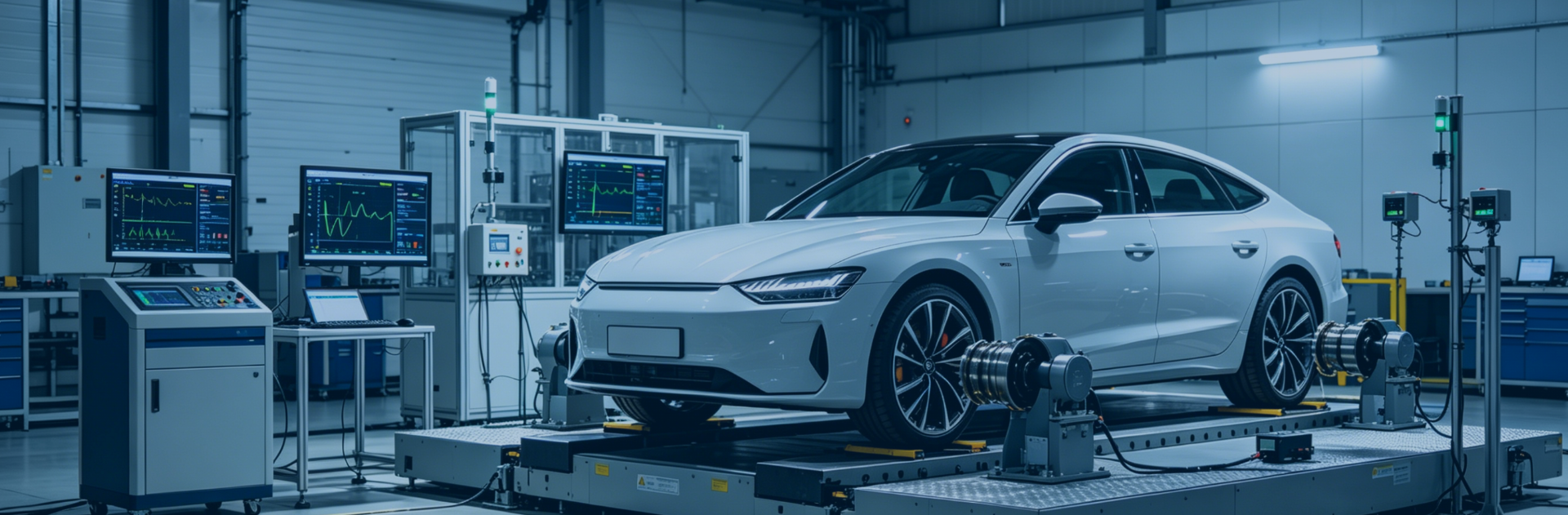
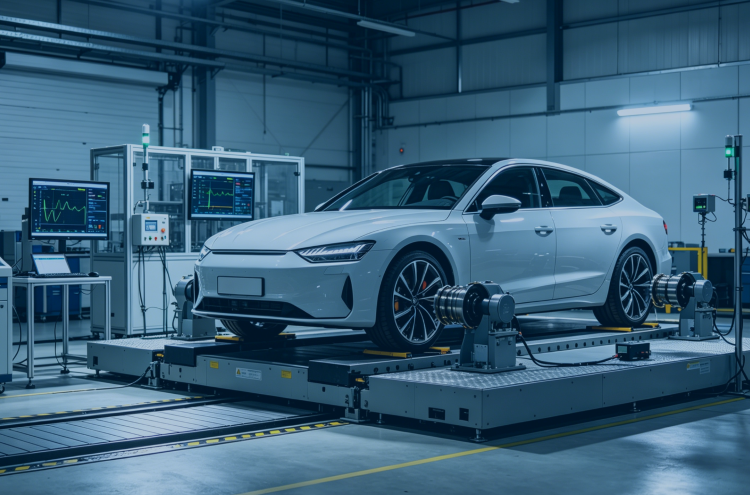
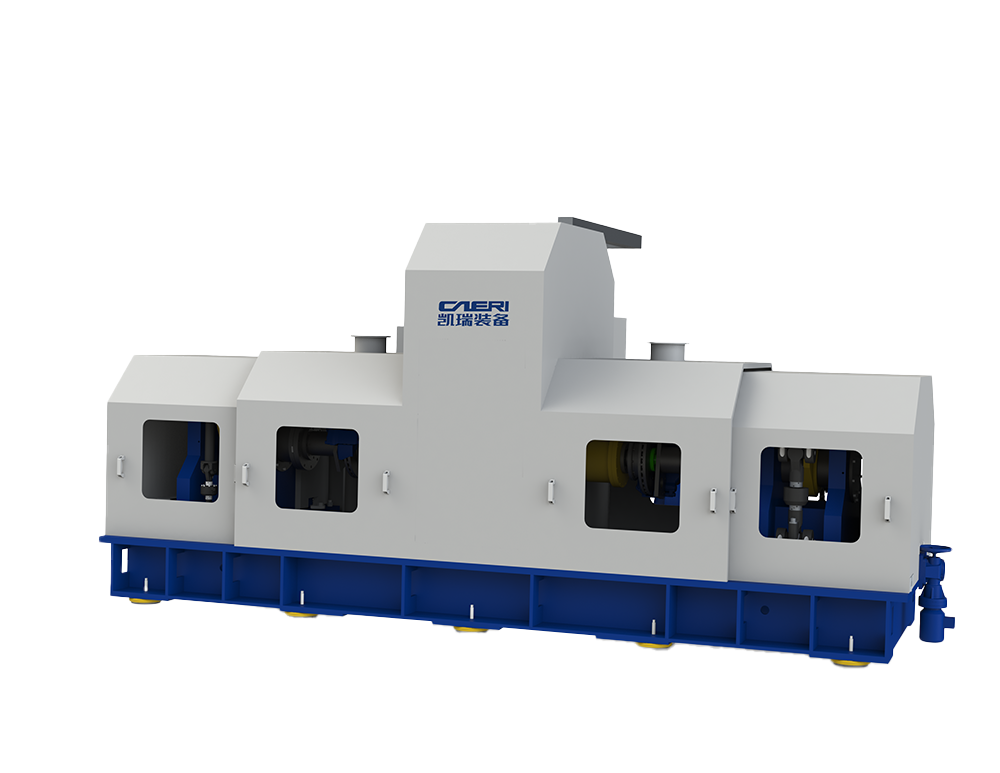
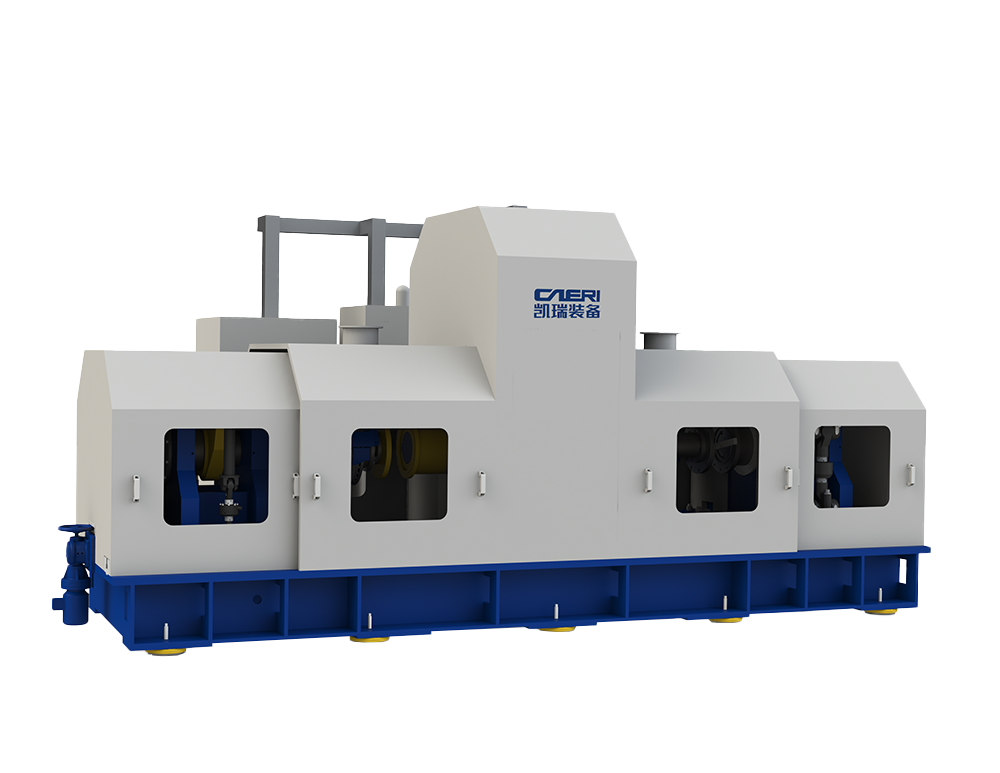
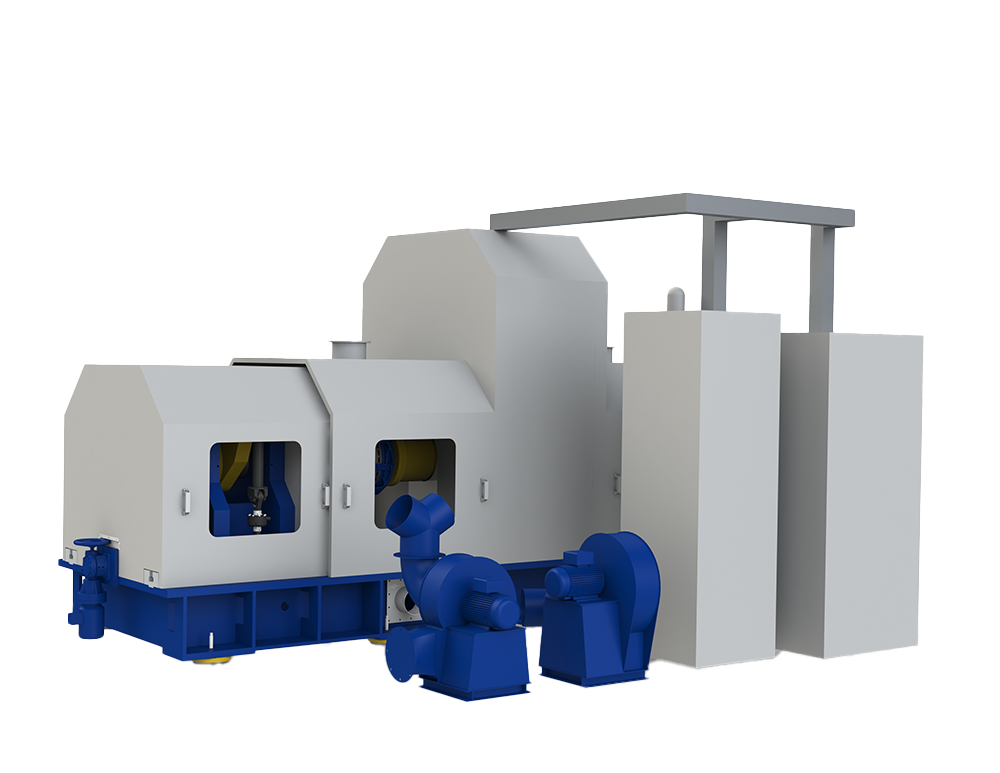
The passenger vehicle brake torsional fatigue test bench is a specialized equipment used for conducting torsional fatigue durability tests on brake assemblies. The brake pressure system is used to generate braking force on the brake assembly. The motor gearbox drives the brake disc or brake drum to rotate, simulating the working process of the brake according to relevant standards, and then performing cyclic torsional fatigue tests on it.
The test bench can set various test parameters such as rotational speed, braking torque, braking frequency, and the number of test cycles. It will automatically run according to the preset steps and test the test data such as rotational speed and braking torque, and draw the relevant test curves.
 Main test contents
| Serial Number | Test Name | Test content |
| 1 | Functional durability test | Control the repeated clamping and releasing of the actuator, monitor the pressure and torque, and assess the stability of the overall long-term operation. |
| 2 | Torsional fatigue strength test | During the rotation of the brake disc, the braking force is repeatedly applied to monitor the fluctuations of various parameters and to test the semi-dynamic fatigue performance of the assembly. |
| 3 | Static torsion strength test | Apply twice the maximum torque and maintain it, to ensure no damage, leakage or cracks under high load conditions. |
| 4 | Forward-reverse switching type torsional fatigue test | Simulate the alternating braking conditions of the vehicle moving forward and backward. Through bidirectional rotation loading, evaluate the structural durability of the assembly. |
| 5 | Transport test | Simulate the impact environment during real vehicle transportation, monitor the deformation amount under loading conditions, and ensure the integrity and reliability of the assembly structure. |
Product featuresThe critical control and measurement components as well as the high-response proportional valves are all made with imported parts, ensuring the system's high precision, fast response and long-term stability.
It is equipped with two completely independent parameter control systems, enabling dual workstations to conduct parallel tests without interfering with each other.
The self-developed software - the brake component and assembly test system software V1.0, supports manual debugging and automatic loop mode, and has complete custom programming and flexible parameter setting functions.
It is equipped with complete safety interlock, abnormal alarm and fault protection functions. It can monitor key indicators such as current and pressure in real time and automatically handle faults.
The process is automatically controlled and results are automatically saved using an industrial control computer. It also supports convenient data query, printing, and real-time monitoring of the operation status.
Technical parameters / Performance indicators| BBD-T20KMain parameters | ||||
| Motor reducer | Power | 18.5kW | Speed | 0~6r/min |
| Torque | 20000Nm | |||
| Brake pressure | Control range | 1.6~25MPa | Control accuracy | ≤±1%FS |
| Pressure application rate | 1~25MPa/s | |||
| Brake torque | Control range | 0~20000Nm | Control accuracy | ≤±1%FS |
| Braking frequency | Control range | 1 to 1000 times per hour | Timing accuracy | 1ms |
| BBD-T20K optional module | ||
| Module/Function | Standard type | Enhanced configuration type |
| Dust collector | No | 3kW, PTFE filter membrane |
| Environmental chamber | No | -40~150℃ |
| EMB/EPB | No | Power module: 80V / 200A |
Applicable standards