
Product Matrix

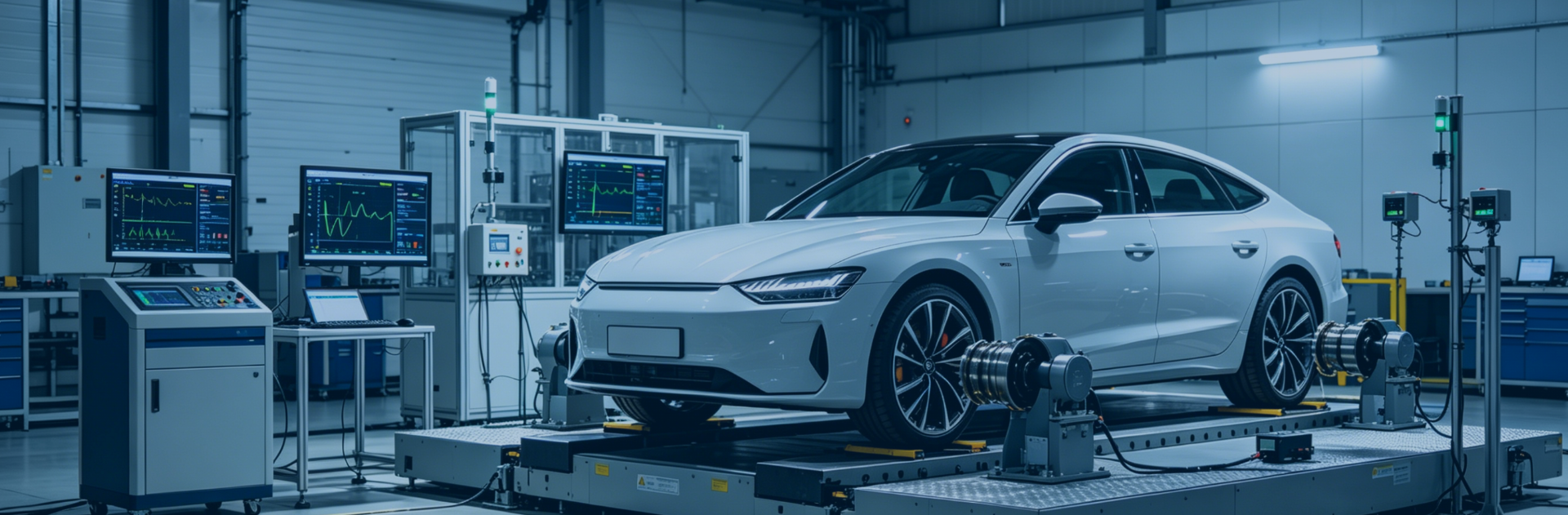
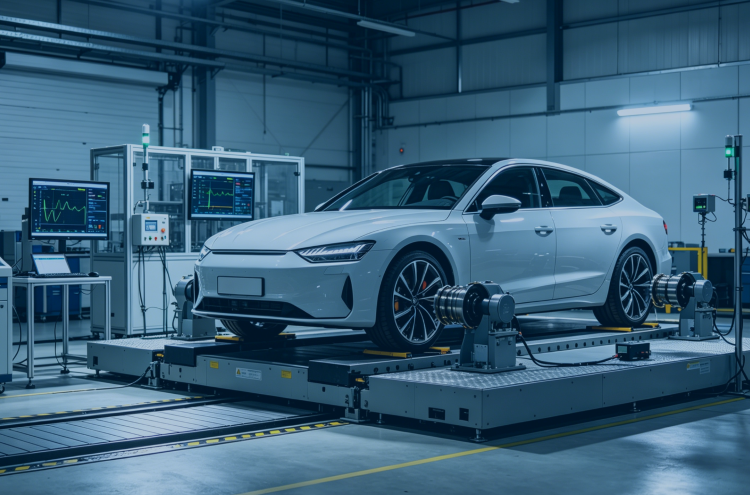
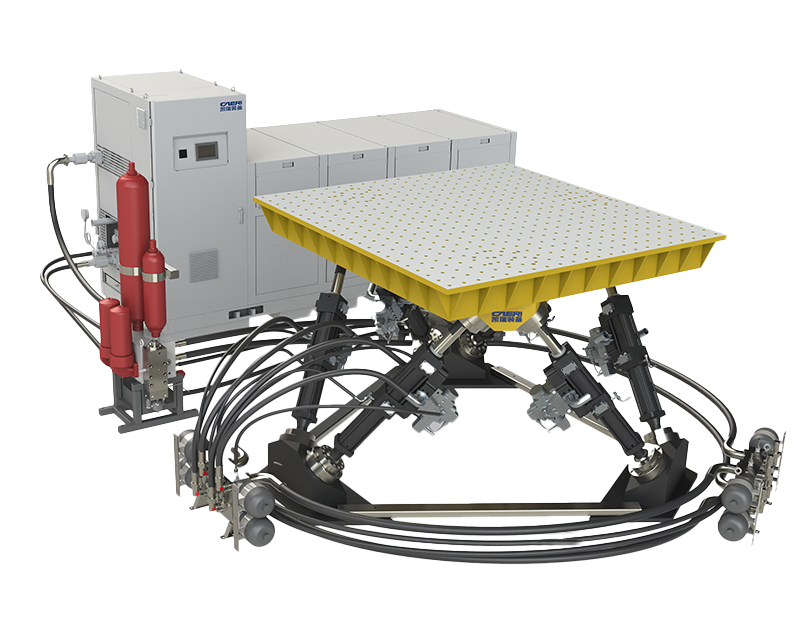
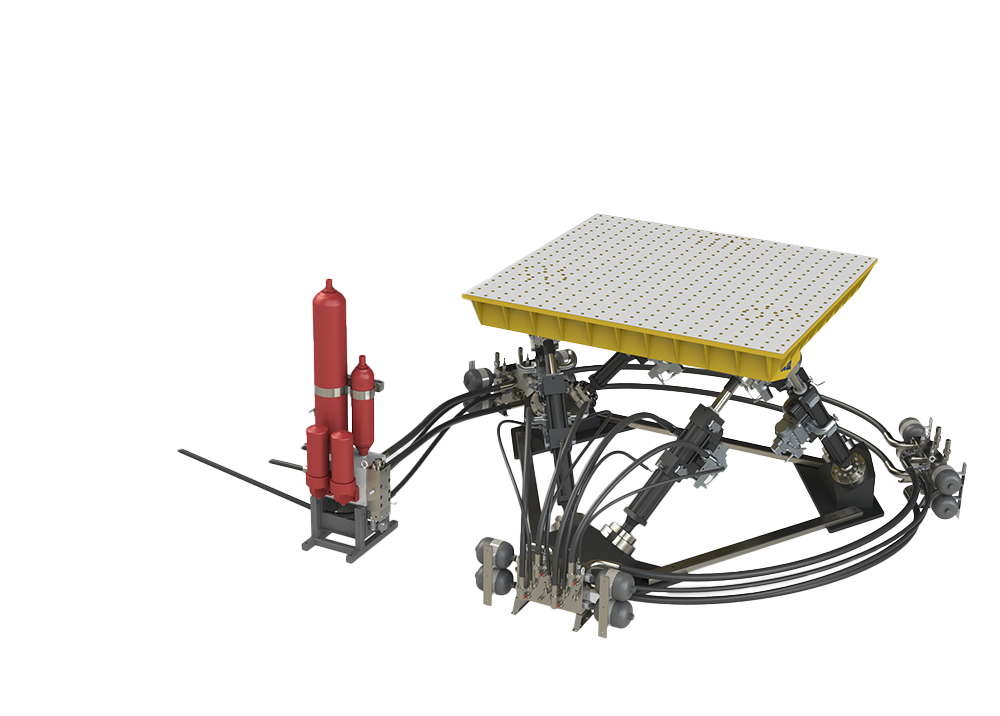
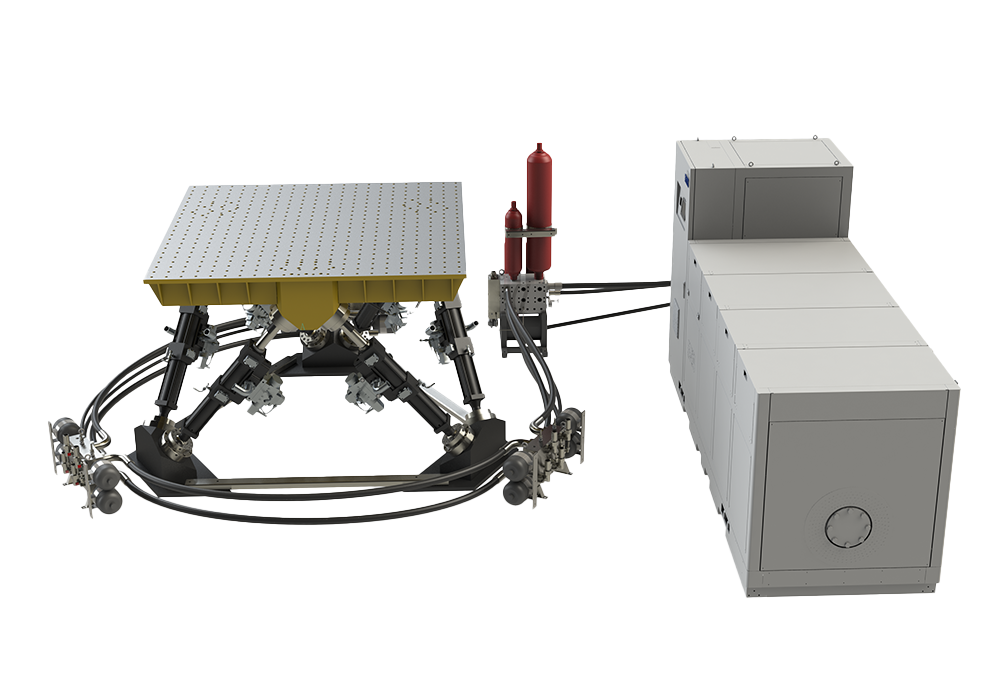
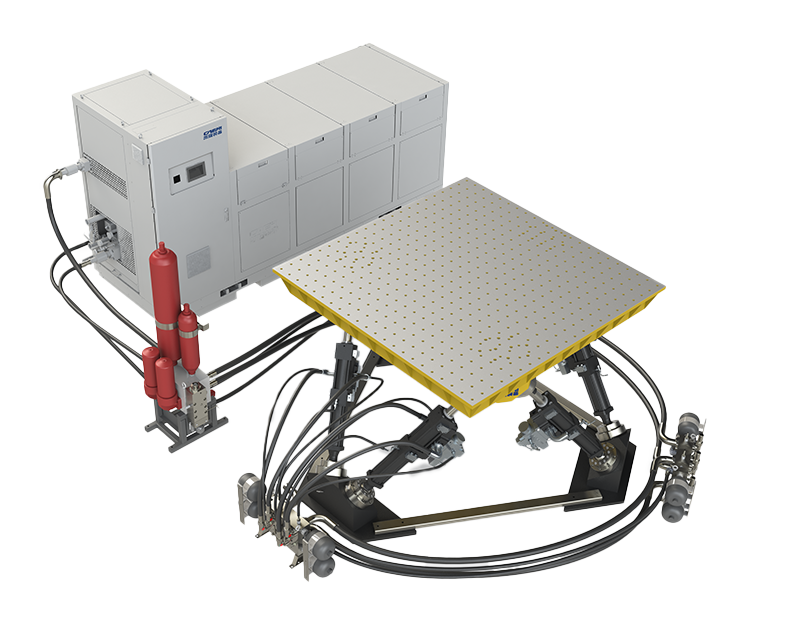
The six-degree-of-freedom vibration platform is mainly used for vibration simulation tests of automotive components, such as seat comfort and noise abnormality tests, battery pack reliability and durability tests, etc. The system is mainly composed of high-dynamic hydraulic servo actuators, dynamic and static platforms, ball joints, silent oil sources, and servo controllers. It can precisely simulate the load conditions of key points of the tested components under actual working conditions, thus meeting the requirements of relevant test scenarios.
Schematic diagram of the six-degree-of-freedom vibration platform system: Through high-precision hydraulic servo actuators for motion control, degree-of-freedom control, system identification and iterative techniques, it can precisely simulate the vibration conditions of components under real working conditions.
 Product features
The industry-leading Stewart structure is adopted to achieve spatial six-degree-of-freedom motion control. The structure is compact, occupies a small area and has strong load-bearing capacity.
Six types of vibrations - X±, Y±, Z±, XY, YZ, XZ - exceed industry standards and can realistically reproduce the vibration conditions of actual vehicles; they can precisely simulate the vibration situation of vehicles traveling on real roads.
High-performance static pressure servo actuators are adopted to achieve vibration excitation. The actuator has excellent control performance and is durable.
Excellent dynamic control algorithm for matching. Ensures the reproduction of real vehicle vibration conditions and guarantees the consistency of vibration reproduction.
Simulated frequency range: 0.8 - 100 Hz; close to the actual excitation range.
The load is more intense and the hydraulic actuator has excellent durability.
Match the silent servo oil source to reduce the background noise of the system operation.
The equipment parameters can be customized according to the requirements of the offline test conditions.
Function / Test Item / Application FieldThe six-degree-of-freedom vibration table can simulate the vibration environment of the vehicle traveling on the actual road surface, and conduct road simulation tests on the tested products. It can generate sine waves, random waves, and reproduce road profiles; simulate driving conditions on secondary and tertiary roads; simulate the vibration environment of the vehicle on a predetermined road and under predetermined conditions; and complete the tests and verification of seat comfort and reliability in the laboratory.
The six-degree-of-freedom vibration table can simulate the vibration environment of the vehicle running on the actual road surface, and conduct road simulation tests on the tested products. It can generate sinusoidal waves, random waves, and reproduce road profiles; simulate driving conditions of secondary and tertiary roads; simulate the vibration environment of the vehicle on a predetermined road and under predetermined conditions; and complete the vibration durability test of the battery pack assembly in the laboratory.
The six-degree-of-freedom vibration table can simulate the vibration environment of the vehicle running on the actual road surface, and conduct road simulation tests on the tested products. It can generate sine waves, random waves, and reproduce road profiles; simulate the operating conditions of secondary and tertiary road surfaces; simulate the vibration environment of the vehicle on the predetermined road surface and under the predetermined form conditions; and complete the vibration durability test of the powertrain in the laboratory.
The six-degree-of-freedom vibration table can simulate the vibration environment of the vehicle running on the actual road surface, and conduct road simulation tests on the tested products. It can generate sinusoidal waves, random waves, and reproduce road profiles; simulate driving conditions of secondary and tertiary roads; simulate the vibration environment of the vehicle on a predetermined road and under predetermined conditions; and complete the vibration durability test of the dashboard assembly in the laboratory.
The six-degree-of-freedom vibration table can simulate the vibration environment of the vehicle running on the actual road surface, and conduct road simulation tests on the tested products. It can generate sine waves, random waves, and reproduce road profiles; simulate driving conditions of secondary and tertiary road surfaces; simulate the vibration environment of the vehicle on a predetermined road surface and under predetermined conditions; and complete the vibration durability test of the vehicle frame accessories in the laboratory.
The six-degree-of-freedom vibration table can achieve high dynamic and high-precision control of position and posture. It simulates the spatial movement of motion equipment (vehicles, aircraft, ships, etc.) in the laboratory, thereby enabling functions such as driving simulation, ride comfort, and smoothness testing.
Technical Specifications| Name | Specification parameters |
| Platform size | Long 2200mm× Wide 2200mm |
| Spacing of the mounting holes on the countertop | 100mm×100mm |
| Maximum vibration mass | 2000kg |
| Vertical Z-axis movement | ±140mm |
| Horizontal X-axis movement | ±125mm |
| Horizontal Y-axis movement | ±110mm |
| Roll angle displacement | ±9° |
| Pitch and roll angle displacement | ±8° |
| Yaw angle displacement | ±6° |
| Z-axis speed | ≤1700mm/s |
| X-axis speed | ≤1300mm/s |
| Y-axis speed | ≤1350mm/s |
| Rolling angle velocity | ≤78deg/s |
| Pitch rate of rotation speed | ≤70deg/s |
| Yaw angular velocity | ≤50deg/s |
| Empty-load Z-axis acceleration | ≤15.9g |
| Unloaded X-axis acceleration | ≤12.8g |
| Empty-load Y-axis acceleration | ≤11.6g |
| Carrying full Z-axis acceleration | ≤6g |
| Carrying full X-axis acceleration | ≤4.8g |
| Carrying full Y-axis acceleration | ≤4.2g |
