
Product Matrix

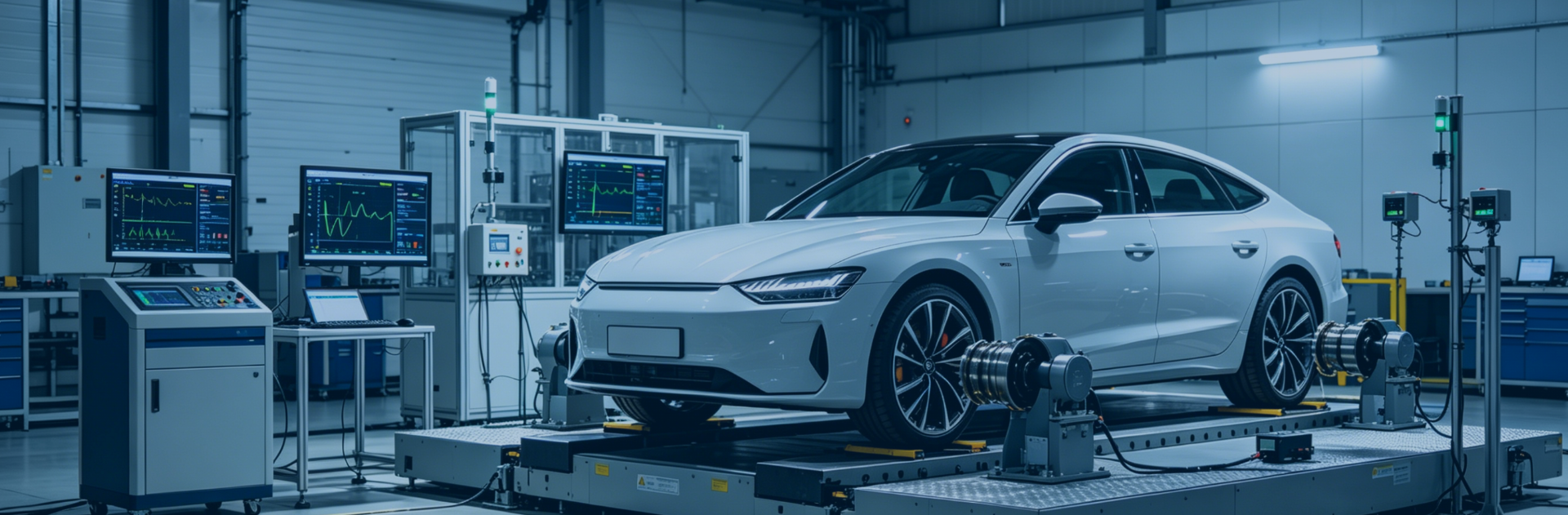
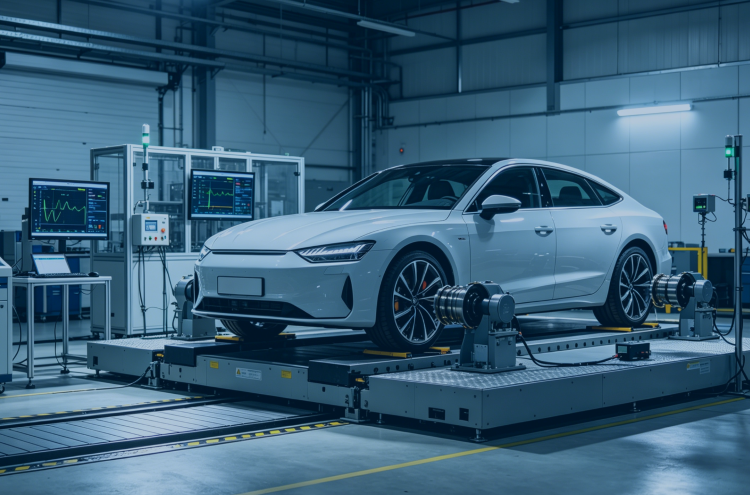
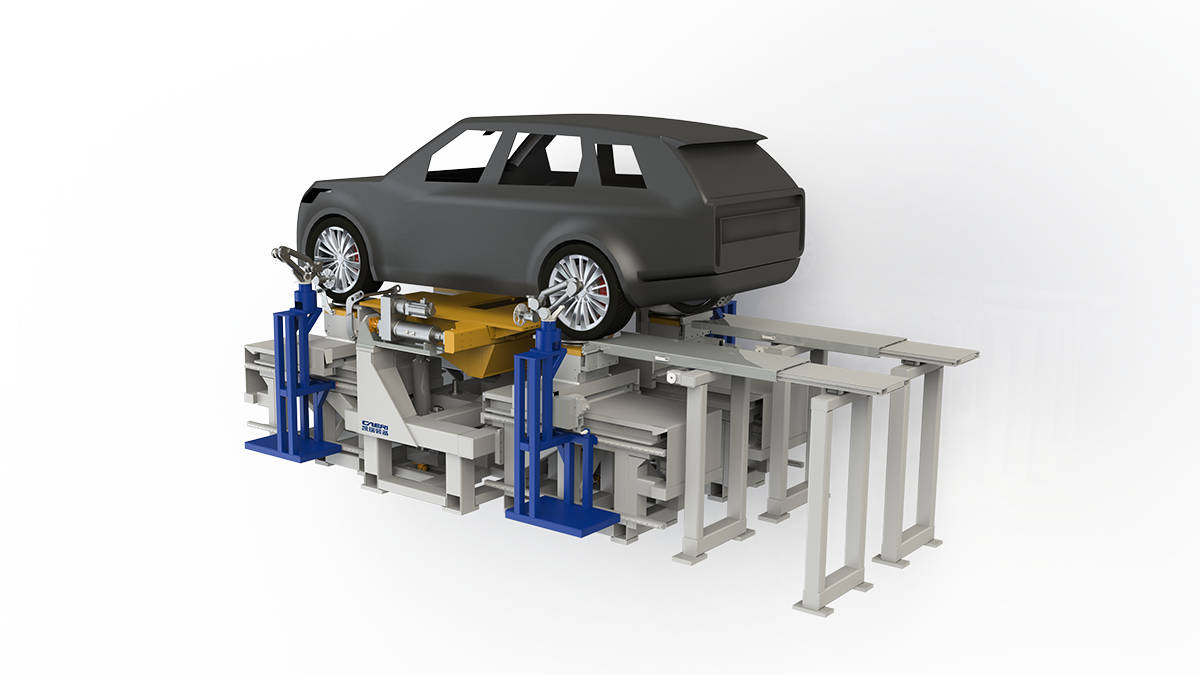
When a car is in motion, the suspension system is of vital importance to the vehicle's stability, comfort and handling. The vehicle bears longitudinal, lateral and vertical forces from the road and driving conditions. These forces are transmitted to the vehicle body through the tires and the suspension system, affecting handling and causing the vehicle to roll, pitch, veer, bump and shake, directly impacting handling, stability and comfort.
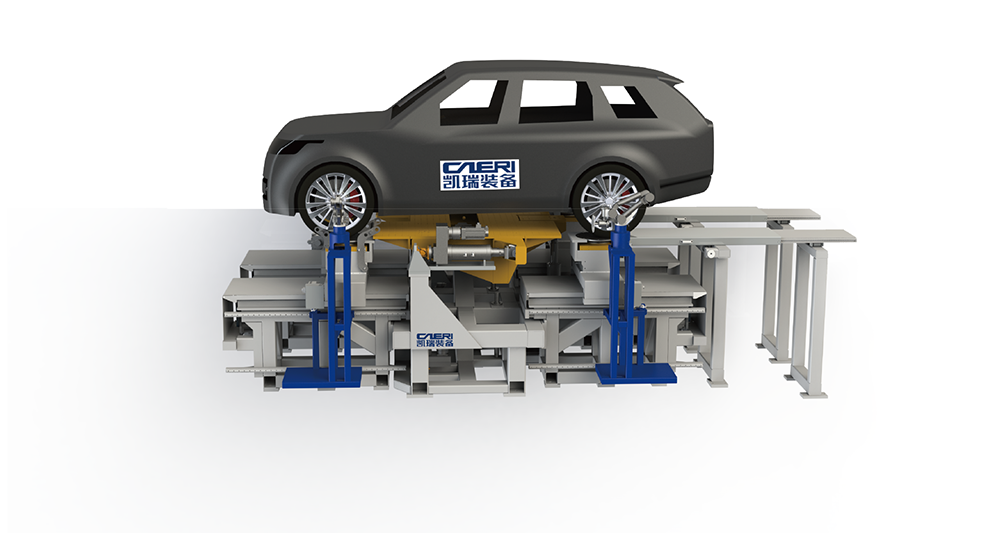
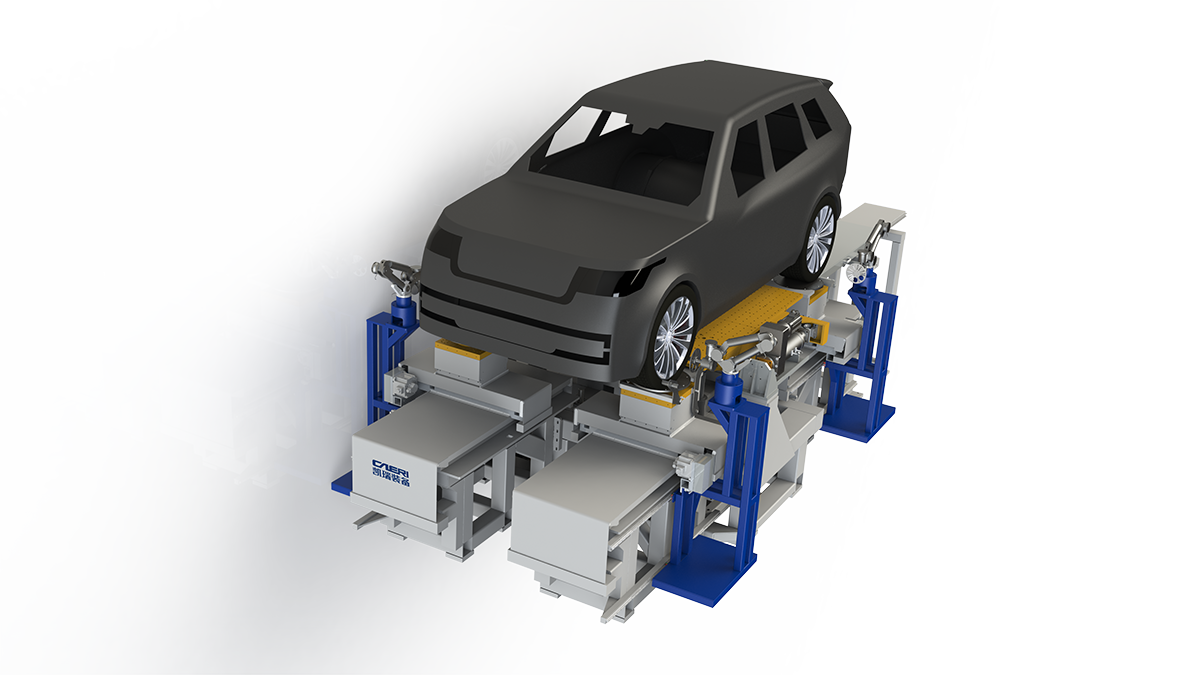
The complete vehicle suspension performance (K&C) test bench equipped by K&C is suitable for the chassis suspension tests of mainstream commercial vehicles, passenger cars, trucks, buses and special vehicles. It has six systems: wheel suspension loading, wheel alignment parameter measurement, steering and braking, data acquisition, software and control system. The test bench has the functions of testing suspension wheel kinematics, side roll kinematics, longitudinal stiffness, lateral stiffness, return force and steering system characteristics, and can provide key theoretical and experimental basis for the reasonable design of suspensions, the optimization of vehicle performance tuning, the resolution of handling stability contradictions and the improvement of vehicle performance and safety.
This test bench drives the vehicle's vertical or lateral movement through a high-precision six-degree-of-freedom central platform. It uses the wheel hub measuring arm and six-component force sensors to measure the size changes and forces of the wheel suspension, simulating conditions such as wheel vertical vibration and lateral forces. It analyzes the changes in wheel alignment parameters and the deformation characteristics of the suspension, providing data support for optimizing the handling stability and comfort. In the forward development of vehicles, it provides precise data for suspension design and chassis tuning, optimizing chassis performance and shortening the development cycle.
 Product capabilitiesProduct features
The equipment size and the software operation interface as well as functions can be customized according to customer requirements.
The electro-hydraulic servo drive system achieves precise displacement loading control; the high-precision six-component force sensor measures the mechanical parameters of the tire contact point with an accuracy of 0.2% FS.
A wheel position measurement system is composed of an imported three-force measurement platform and an imported displacement sensor. The structure is well-designed and the measurement is accurate.
The application of electric cylinders, servo motors, pull wire displacement sensors, three-component force sensors, angle sensors and torque sensors is mature, the supply channels are fast, the price advantage is obvious, and the cost performance is high.
Product advantagesEmploy the most advanced technological software and control systems.
The key equipment components have been verified to have low maintenance costs.
Offer high-quality equipment at reasonable prices and provide prompt after-sales service.
Having rich experience in equipment manufacturing and commissioning.
Meet the requirements of NPP and pass the NPP audit.
Passed the equipment certification of the Volkswagen Group.
Technical Specifications| Project | Parameters |
| Vehicle driving method | Two-wheel drive / Four-wheel drive 2WD / 4WD |
| Vehicle maximum dimensions - Length | ≤ 6 m |
| Axle spacing adjustment range | 2 000‒4 300 mm, Precision ±1 mm |
| Wheel spacing adjustment range | 1 100‒2 100 mm, Precision ±1 mm |
| Maximum vehicle weight | ≤ 5 000 kg |
| Longitudinal force of the wheel platform | ±20 000 N (±0.1 % FS) |
| Lateral force of the wheel platform | ±20 000 N (±0.1 % FS) |
| Vertical force of the wheel platform | 60 000 N (±0.1 % FS) |
| Wheel steering movement (front toe angle) | ±45°, Precision ±0.03° (±45°), ±0.01° (±10°) |
| Wheel rotation motion (rolling angle) | ±30°, Precision ±0.01° (±30°) |
| Wheel side-slip movement (outward camber) | ±15°, Precision ±0.01° (±15°), ±0.005° (±1°) |
Reference standard