
Product Matrix

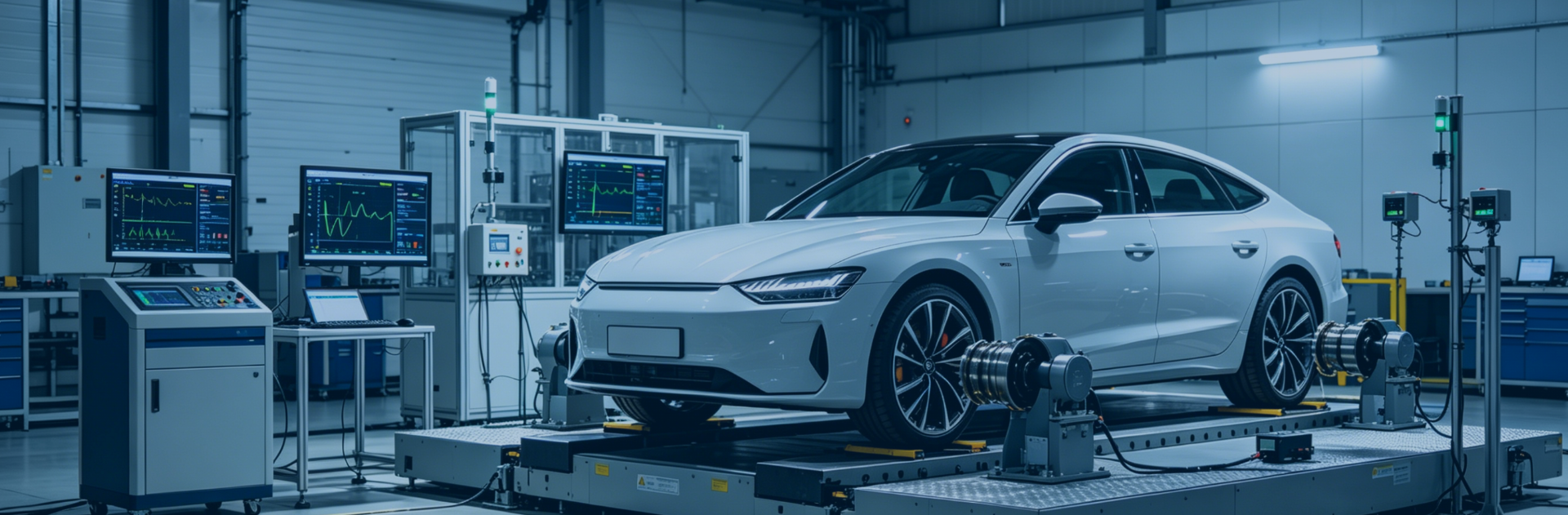
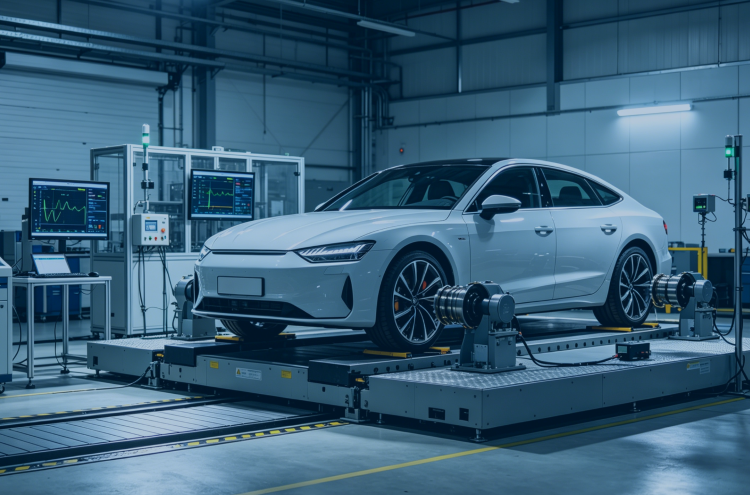
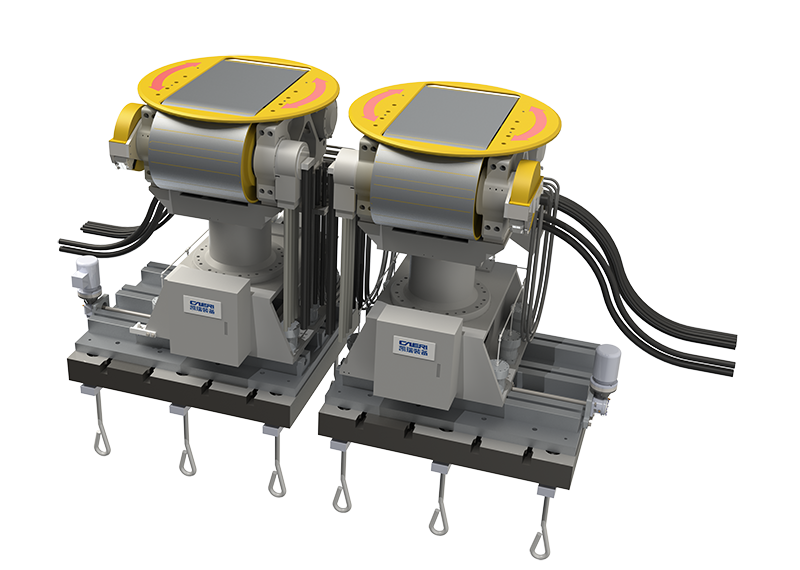
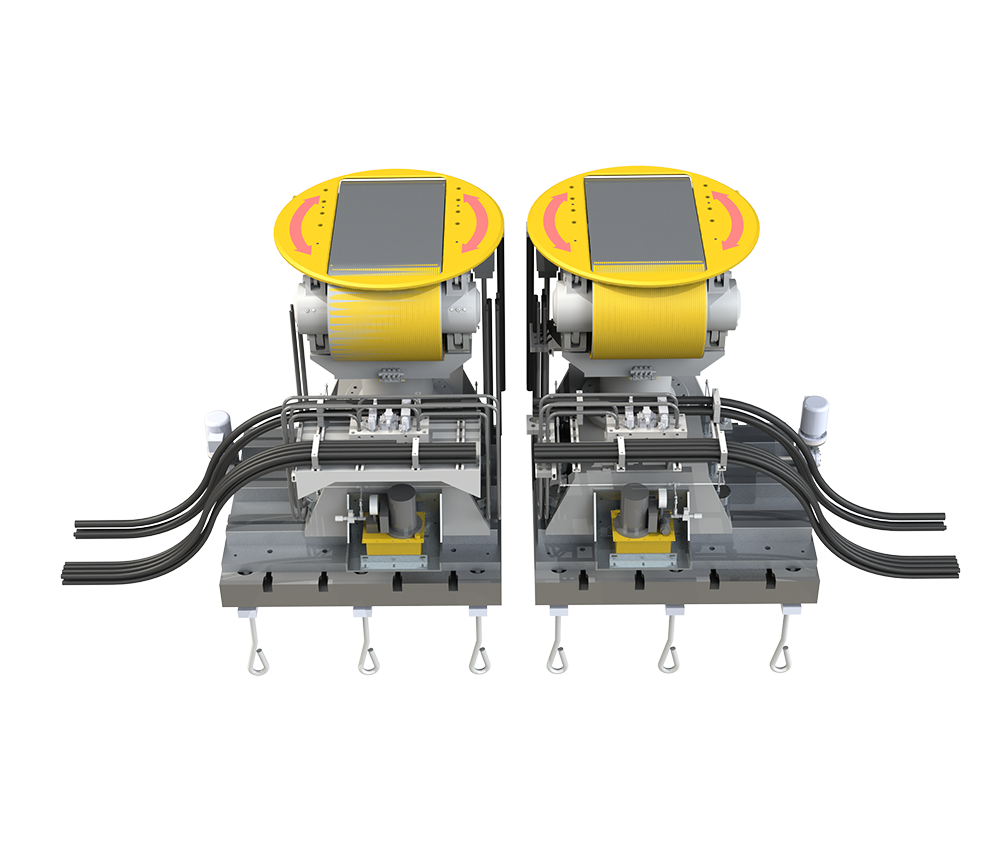
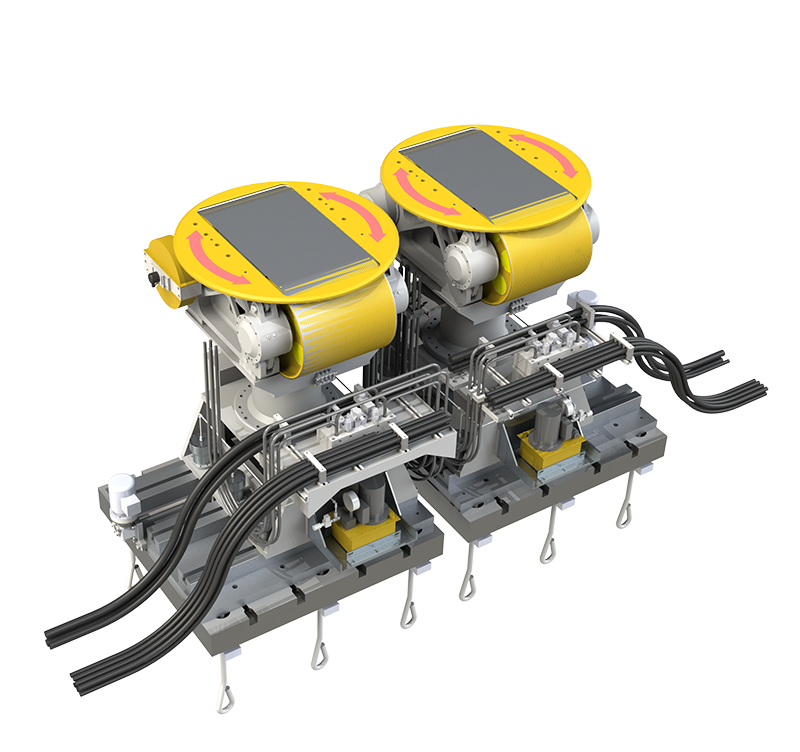
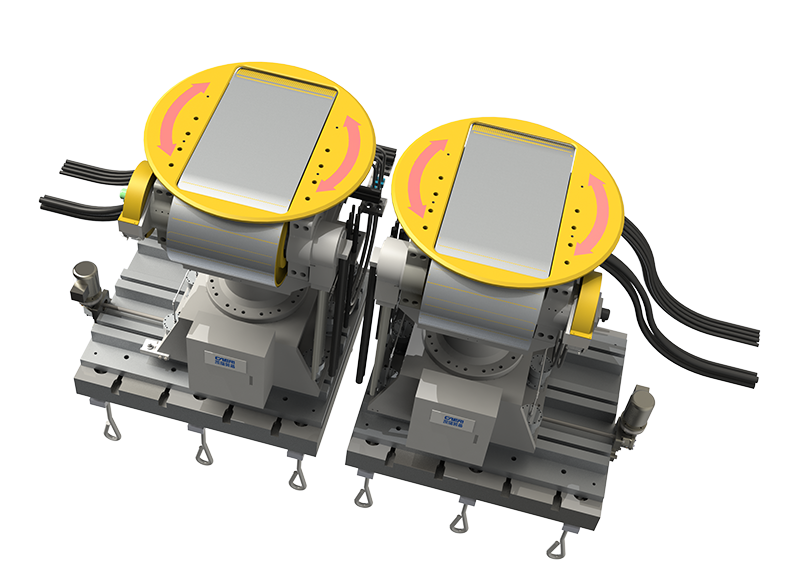
 Product features
Smooth the road surface, making it closer to a real road.
It can simulate roads of different roughness levels.
Can reproduce more dynamic conditions.
Low rotational inertia enables faster acceleration and deceleration processes, allowing for steering simulation and easy integration of road vibration conditions.
No parasitic losses, no need for corrections, capable of accurately simulating the real vehicle's transient load spectrum.
Function and UseRoad simulation dynamometer system: WLTP/NEDC or EPA tests, etc. can be used to test the main performance of automobiles such as power, fuel economy (fuel consumption), multi-condition emissions, electric vehicle range, and engine cooling and heat dissipation capacity of the entire vehicle; it can also conduct tests such as continuous climbing of steep slopes and hills (18%), and continuous downhill driving at constant speed (18%) (Type II and Type IA).
Passenger comfort, driving control, and high dynamic condition tests: In a controlled laboratory environment, the test vehicle's tires are driven to simulate the acceleration/deceleration movement process of the vehicle and the superimposed vertical road bumps. The effects of these excitations on the vehicle's suspension, body components, and the driver and passengers inside the vehicle are studied to conduct a thorough assessment of the passenger comfort and driving control. Specifically, this includes passenger comfort assessment, noise and vibration transmission, energy consumption, driving performance, and power system optimization.
For intelligent vehicle driving assistance functions: Whole vehicle in-vehicle dynamometer test, intelligent cabin test. Whole vehicle in-vehicle simulation test: The entire autonomous driving vehicle is placed in a simulated simulation loop for testing. That is, the vehicle control uses the real planning decision system and control execution system, the road surface is simulated through multi-degree-of-freedom drum platform and other means, and the traffic scenarios are simulated through simulation software modeling, data playback input, etc.
Technical Specifications| Type | Two-wheel drive | Four-wheel drive |
| Maximum speed | 200km/h | 200km/h |
| Maximum single-wheel absorption power | Rated power150kW The greatest200kW |
Rated power150kW The greatest200kW |
| Single-wheel maximum traction | Rated power5000N The greatest8000N |
Rated power5000N The greatest8000N |
| Tire steering angle | ±45° | ±45°(Quad-Drive Steering) |
| Simulation range of vehicle inertia | 1000~3500kg | 1000~3500kg |
| Axle spacing adjustment range | 1.3~2.1m | 1.6~2m |
| Wheel spacing adjustment range | \ | 2.3~3.5m |
